Bail Application: 7 Critical Steps to Secure Your Release

Bail Application: 7 Critical Steps to Secure Your Release
By Charles Reece | Published by Reece Law Inc.

Finding yourself or a loved one facing criminal charges is overwhelming, and understanding the bail application process becomes your immediate priority. A bail application is your legal gateway to temporary freedom while awaiting trial, but navigating this complex procedure requires knowledge, preparation, and often expert legal guidance.
The South African criminal justice system recognizes that an accused person is presumed innocent until proven guilty. This fundamental principle supports the right to apply for bail, allowing you to maintain employment, family responsibilities, and actively participate in preparing your defense. However, securing bail is not automatic and depends on multiple factors the court carefully evaluates.
This comprehensive guide walks you through every critical aspect of the bail application process, from understanding your rights to presenting a compelling case before the court. Whether you’re facing minor charges or serious allegations, knowing what to expect can make the difference between detention and release.
Understanding What a Bail Application Is
A bail application is a formal legal process where an accused person requests the court to grant temporary release from custody pending the finalization of criminal proceedings. This application balances the accused’s right to liberty against society’s interests in ensuring the accused appears for trial and does not pose a danger to the community.
The Constitutional Court of South Africa has repeatedly affirmed that liberty is the norm and detention the exception. This means courts should favor granting bail unless compelling reasons exist to deny it. The burden of proof varies depending on the severity of the offense charged.
For most offenses, the State must convince the court why bail should be denied. However, for serious crimes listed in Schedule 5 and Schedule 6 of the Criminal Procedure Act (such as murder, rape, armed robbery, and drug trafficking), a reverse onus applies. In these cases, you must prove exceptional circumstances justifying your release.
The Legal Framework Governing Bail in South Africa
The bail system operates under Section 35 of the Constitution and Section 60 of the Criminal Procedure Act 51 of 1977. These provisions establish your right to apply for bail while protecting public safety and the integrity of the justice system.
Courts must consider whether you are likely to:
- Attend your trial and comply with bail conditions
- Interfere with witnesses or evidence
- Commit further offenses while on bail
- Pose a danger to public safety or order
- Undermine public confidence in the criminal justice system if released
Understanding these considerations helps you prepare a stronger bail application that directly addresses the court’s concerns. Reece Law Inc. specializes in crafting persuasive bail applications that highlight factors favoring release while mitigating risks the court may perceive.
Step 1: Immediate Actions After Arrest
The moments following an arrest are critical for your bail prospects. Your actions during this period can significantly impact the court’s perception of your case and willingness to grant bail.
Exercise Your Right to Remain Silent
You have the constitutional right to remain silent and not incriminate yourself. Politely decline to answer questions beyond providing your basic identifying information until you have consulted with an attorney. Anything you say can be used against you in court and may complicate your bail application.
Police may seem friendly or suggest that cooperation will help your case, but making statements without legal advice is risky. Your attorney will guide you on what information is safe to provide and when.
Request Legal Representation Immediately
Contact a criminal defense attorney as soon as possible after arrest. Early legal intervention allows your lawyer to begin gathering supporting documentation, interviewing potential witnesses, and developing your bail strategy before your first court appearance.
If you cannot afford a private attorney, you have the right to apply for Legal Aid South Africa representation. However, private attorneys often provide more personalized attention and resources that can strengthen your bail application.
Gather Contact Information for Sureties
Identify reliable individuals who can serve as sureties for your bail. Sureties are people who pledge to ensure you comply with bail conditions and attend all court dates. Ideal sureties are employed, have permanent addresses, and can demonstrate their own reliability and good standing in the community.
Provide your attorney with their full contact details so they can prepare affidavits and potentially arrange for these individuals to testify at your bail hearing.
Step 2: Understanding the Different Types of Bail
South African law recognizes several forms of bail, each appropriate for different circumstances and offense severities. Understanding these options helps you know what to expect and request.
Police Bail
For minor offenses, a senior police officer at the station may grant police bail before your first court appearance. This typically applies to less serious charges where the investigating officer is satisfied you will appear in court and do not pose a flight risk or danger.
Police bail allows immediate release, often within hours of arrest, with conditions to appear in court on a specified date. The police set the bail amount, which is generally modest for qualifying offenses.
Court Bail
Most bail applications are determined by a magistrate or judge during a formal court hearing. Court bail involves presenting arguments, evidence, and sometimes witness testimony to convince the judicial officer that granting bail is appropriate.
The complexity of court bail hearings varies. For Schedule 1 offenses (minor crimes), bail may be granted at your first appearance with minimal formality. For Schedule 5 and 6 offenses, expect multiple hearing dates and extensive legal argument.
Bail Pending Appeal
If convicted and sentenced, you can apply for bail pending the outcome of your appeal. This type of bail is more difficult to obtain because you no longer enjoy the presumption of innocence. The court must be satisfied that your appeal has reasonable prospects of success and that exceptional circumstances justify release.
Prosecutor Bail
In limited circumstances, a prosecutor may consent to your release on bail with specific conditions. This informal arrangement typically occurs when the State does not oppose bail for minor offenses, allowing quicker release without a formal court hearing.

Step 3: Preparing Your Bail Application
A successful bail application requires meticulous preparation and presentation of compelling evidence. This preparation phase determines whether the court grants your release or orders continued detention.
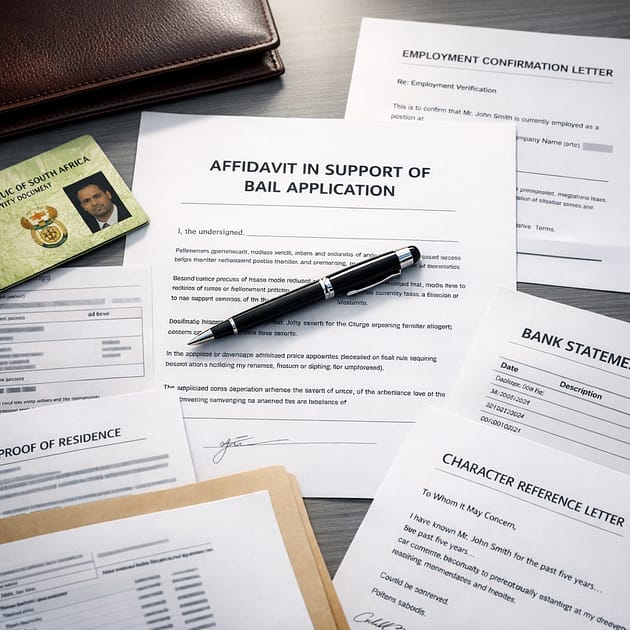
Collecting Supporting Documentation
Strengthen your bail application by gathering documents that demonstrate your reliability, community ties, and ability to comply with bail conditions:
- Proof of residence: Lease agreements, utility bills, or property ownership documents showing a fixed address
- Employment verification: Employment contracts, recent pay slips, or letters from employers confirming your position and tenure
- Financial records: Bank statements, asset declarations, and evidence of income to demonstrate ability to pay bail
- Family ties: Marriage certificates, birth certificates of dependents, and affidavits from family members attesting to your character
- Character references: Letters from community leaders, religious figures, employers, or respected individuals vouching for your character
- Medical documentation: If you have health conditions requiring ongoing treatment, medical reports can support arguments for release
These documents transform abstract arguments into concrete evidence the court can evaluate. Your attorney will organize this documentation into a coherent presentation that addresses the court’s specific concerns.
Drafting Your Bail Affidavit
Your bail affidavit is a sworn statement outlining why you should be granted bail. This document typically includes:
- Your personal details, employment, and family circumstances
- Your version of events related to the charges (carefully prepared with legal advice)
- Reasons why you are not a flight risk
- Commitments not to interfere with witnesses or evidence
- Proposed bail conditions you can comply with
- Financial information relevant to setting an appropriate bail amount
Your attorney drafts this affidavit strategically, balancing honesty with careful framing that supports your release without compromising your defense for trial. Never draft this document alone or provide false information, as this can result in bail denial and additional charges for perjury.
Identifying and Preparing Witnesses
In some cases, calling witnesses to testify at your bail hearing strengthens your application. Potential witnesses include employers, family members, community leaders, or other individuals who can speak to your character, reliability, and ties to the community.
Your attorney prepares these witnesses by explaining the court process, reviewing their testimony, and ensuring they understand the questions they may face during cross-examination by the State.
Step 4: The Bail Hearing Process
Understanding what happens during your bail hearing reduces anxiety and helps you participate effectively in your defense. The hearing follows a structured legal process with specific stages and opportunities to present your case.
Initial Court Appearance
Your first court appearance typically occurs within 48 hours of arrest. At this appearance, the magistrate informs you of the charges, verifies that you understand them, and addresses the question of bail.
For minor offenses, bail may be set immediately with standard conditions. For more serious charges, the magistrate may postpone the bail hearing to allow both sides time to prepare, typically for 7 to 14 days. During this postponement, you remain in custody unless police bail was granted.
Formal Bail Hearing
The formal bail hearing proceeds in several stages:
Opening statements: Your attorney outlines why bail should be granted, highlighting factors favoring release. The prosecutor presents the State’s position on whether bail should be granted and under what conditions.
Presentation of evidence: Your attorney submits your affidavit and supporting documentation. You may be called to testify, answering questions from your attorney and facing cross-examination from the prosecutor. Supporting witnesses may also testify.
State’s evidence: The prosecutor may present evidence opposing bail, such as the investigating officer’s testimony about the seriousness of the offense, strength of the State’s case, or concerns about flight risk or witness interference.
Legal argument: Both attorneys present legal arguments, citing relevant case law and statutory provisions supporting their positions on bail.
Magistrate’s decision: After considering all evidence and arguments, the magistrate delivers a ruling either granting or denying bail. If granted, the magistrate sets the bail amount and conditions. If denied, you remain in custody and can consider appealing the decision.
Questioning and Cross-Examination
If you testify at your bail hearing, expect questions from both your attorney and the prosecutor. Your attorney’s questions allow you to present your case positively, while the prosecutor’s cross-examination challenges your credibility and tests the strength of your application.
Answer all questions honestly, concisely, and respectfully. Avoid volunteering information beyond what is asked, and never argue with the prosecutor or magistrate. Your attorney will object to improper questions and guide you through difficult moments.
Preparation with your legal team is essential to handle this questioning confidently and effectively.
Step 5: Factors That Influence Bail Decisions
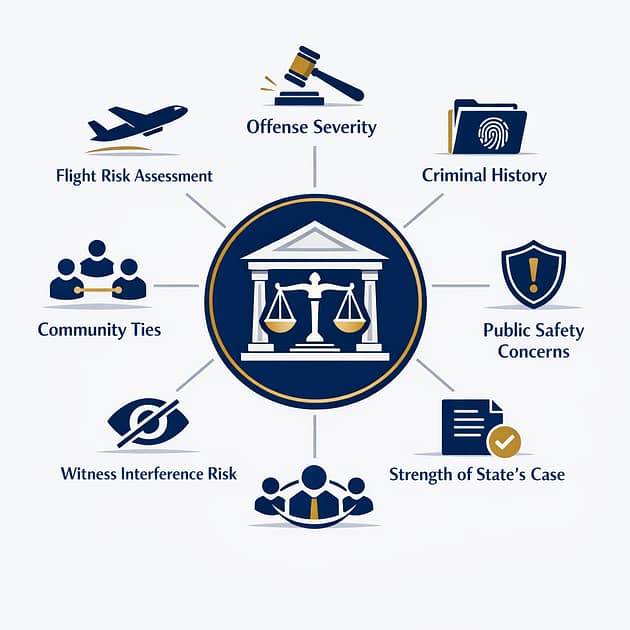
Courts apply a structured analysis when deciding bail applications, weighing multiple factors to determine whether release is appropriate and what conditions should apply. Understanding these factors allows you to address them proactively in your application.
Nature and Severity of the Offense
The seriousness of the charges significantly impacts bail decisions. Minor offenses like petty theft or common assault typically result in bail being granted with reasonable conditions. Serious crimes involving violence, large-scale fraud, or substantial drug quantities face much stricter scrutiny.
Schedule 5 offenses (including serious assault, commercial drug crimes, and certain fraud charges) and Schedule 6 offenses (murder, rape, armed robbery, and high-level drug trafficking) carry a presumption against bail unless you prove exceptional circumstances.
Flight Risk Assessment
Courts carefully evaluate whether you are likely to flee the jurisdiction to avoid trial. Factors indicating low flight risk include:
- Long-term residence in the area with permanent accommodation
- Stable employment or business interests that cannot easily be abandoned
- Close family ties, especially dependents relying on you
- Surrender of passport and willingness to accept travel restrictions
- No previous history of absconding or failing to appear in court
- Limited financial resources to sustain life as a fugitive
Conversely, international connections, significant wealth, lack of permanent address, or previous failures to appear in court suggest higher flight risk and may result in bail denial or very strict conditions.
Likelihood of Interfering with Witnesses or Evidence
The court assesses whether releasing you could compromise the investigation or trial process. Concerns increase when alleged victims or key witnesses are family members, co-workers, or neighbors you could easily contact.
You can mitigate these concerns by agreeing to conditions prohibiting contact with specific individuals, relocating temporarily, or surrendering communication devices if appropriate. Your attorney can propose creative conditions that protect witnesses while allowing your release.
Criminal History and Previous Convictions
A clean criminal record strongly supports bail applications, demonstrating law-abiding behavior and respect for the justice system. First-time offenders generally receive more favorable consideration than repeat offenders.
Previous convictions, especially for similar offenses, suggest a pattern of criminal behavior and increased likelihood of reoffending. Outstanding warrants or previous bail violations severely damage bail prospects, as they demonstrate unreliability and disrespect for court orders.
If you have a criminal history, your attorney must honestly address this while emphasizing rehabilitation, time elapsed since previous offenses, and changed circumstances that reduce reoffending risk.
Strength of the State’s Case
While not determinative, the strength of evidence against you influences bail decisions. Overwhelming evidence may suggest that fleeing is your only option to avoid conviction, increasing flight risk concerns. Weak evidence with good prospects of acquittal suggests less motivation to abscond.
However, bail hearings are not mini-trials. The magistrate does not determine guilt or innocence but considers the general strength of the State’s case as one factor among many.
Public Safety and Order Considerations
Courts must consider whether releasing you poses a danger to public safety or would disturb public order. This factor becomes particularly relevant for violent crimes, sexual offenses, or cases that have attracted significant media attention and public concern.
The court balances your right to liberty against the community’s right to safety and the justice system’s need to maintain public confidence. In high-profile cases, public opinion pressure may influence judicial discretion, though courts should remain impartial.
Step 6: Navigating Bail Conditions
When the court grants bail, it almost always imposes conditions designed to ensure you appear for trial and do not pose risks during the interim period. Understanding and scrupulously complying with these conditions is essential to maintaining your freedom.
Common Bail Conditions
Typical bail conditions include:
- Reporting requirements: Regular appearances at a designated police station, often weekly or even daily for serious offenses
- Residence restrictions: Residing at a specific address and informing the court and investigating officer of any address changes
- Travel limitations: Surrendering passports, not leaving a specific geographic area, or obtaining court permission before traveling
- Contact prohibitions: Not communicating with alleged victims, witnesses, or co-accused persons
- Behavioral restrictions: Abstaining from alcohol or drugs, avoiding specific locations, or observing curfews
- Sureties: Having one or more individuals guarantee your compliance with bail conditions
- Financial guarantees: Depositing the bail amount or providing other security that will be forfeited if you breach conditions
Your attorney can negotiate appropriate conditions that balance the court’s concerns with your ability to maintain employment and family responsibilities.
Consequences of Violating Bail Conditions
Breaching bail conditions triggers serious consequences. The State can apply for a warrant for your immediate arrest and detention. Once arrested for a bail violation, obtaining bail again becomes extremely difficult, as you have demonstrated unreliability.
Additional criminal charges may be laid for breaching bail conditions, adding to your legal problems. The court will likely forfeit any bail money deposited, and sureties may face financial penalties.
Most importantly, bail violations create an adverse record that prosecutors use to oppose any future bail applications and can negatively influence sentencing if you are eventually convicted on the underlying charges.
Modifying Bail Conditions
If circumstances change or bail conditions prove unworkable, you can apply to the court for modification. Valid reasons for variation include:
- Employment requiring travel that current conditions prohibit
- Family emergencies necessitating temporary relocation
- Medical needs requiring treatment in other areas
- Overly restrictive conditions that serve no practical purpose
Your attorney files a formal application explaining the changed circumstances and proposing alternative conditions that still satisfy the court’s original concerns. The State may consent to reasonable modifications or oppose changes they view as undermining the bail order’s purpose.

Step 7: Working with Legal Representation
While you can technically represent yourself in a bail application, the stakes are too high and the process too complex to proceed without experienced legal counsel. Professional representation dramatically improves your chances of securing bail and favorable conditions.
How Attorneys Strengthen Bail Applications
Skilled criminal defense attorneys provide invaluable advantages in bail proceedings:
Legal expertise: Attorneys understand the nuanced legal framework governing bail, including recent case law developments and effective arguments that persuade courts. They know which factors magistrates prioritize and how to frame your circumstances favorably.
Strategic preparation: Lawyers identify the strongest aspects of your case and gather compelling evidence to support release. They anticipate the State’s objections and prepare counter-arguments before the hearing.
Professional presentation: Attorneys present your case coherently and persuasively, adhering to court protocols and legal standards. Their credibility and professional standing lend weight to arguments.
Negotiation skills: Experienced lawyers often negotiate with prosecutors before hearings, potentially securing consent to bail or agreement on reasonable conditions that avoid contested hearings.
Procedural protection: Attorneys ensure your rights are protected throughout the process, object to improper questions or evidence, and prevent procedural errors that could jeopardize your application.
What to Expect from Your Attorney
Your relationship with your attorney should be collaborative and based on trust. Expect your lawyer to:
- Explain the bail process, realistic prospects, and potential outcomes
- Gather necessary documentation and evidence
- Draft your affidavit and prepare you for testimony
- Appear at all court proceedings on your behalf
- Present persuasive arguments and cross-examine State witnesses
- Advise on bail conditions and negotiate favorable terms
- Handle appeals if bail is initially denied
In return, provide your attorney with complete honesty, all relevant information, and prompt responses to requests for documentation or meetings. Withholding information or misleading your lawyer undermines your case and creates ethical problems.
Choosing the Right Legal Partner
Select an attorney with proven experience in criminal defense and bail applications. Reece Law Inc. has successfully represented countless clients in bail proceedings, from minor offenses to the most serious charges under Schedule 6.
Look for lawyers who demonstrate:
- Extensive criminal law experience and knowledge of bail jurisprudence
- Strong relationships with prosecutors and court personnel
- Clear communication and responsiveness to your concerns
- Realistic assessments of your case rather than unrealistic promises
- Transparent fee structures and billing practices
The investment in quality legal representation often determines whether you await trial from home or from a holding cell. This choice profoundly impacts your ability to prepare your defense, maintain employment, and support your family during the legal process.
Understanding Schedule 5 and Schedule 6 Offenses
Schedule 5 and Schedule 6 offenses under the Criminal Procedure Act face special bail provisions that make securing release significantly more challenging. These schedules list the most serious crimes, requiring heightened scrutiny before granting bail.
Schedule 5 Offenses
Schedule 5 includes serious crimes such as:
- Rape
- Indecent assault involving minors
- Murder (not premeditated or involving specific aggravating factors)
- Kidnapping
- Assault with intent to cause grievous bodily harm
- Robbery involving firearms or violence
- Drug dealing involving substantial quantities
- Certain corruption and fraud offenses exceeding value thresholds
For Schedule 5 offenses, the burden shifts partially to you. While the State need not prove you should be detained, you must satisfy the court that the interests of justice permit your release. You demonstrate this by showing you are not a flight risk, will not interfere with the case, and do not pose a danger to public safety.
Schedule 6 Offenses
Schedule 6 covers the gravest offenses, including:
- Premeditated murder
- Murder involving specific aggravating circumstances (rape-murder, killing law enforcement officers, witness killings)
- Gang-related planned murder
- High-level drug trafficking (commercial quantities)
- Terrorism-related offenses
For Schedule 6 offenses, a strong presumption against bail exists. You must prove exceptional circumstances justifying release, a much higher standard than ordinary bail applications. Exceptional circumstances might include:
- Overwhelming likelihood of acquittal based on the evidence
- Serious medical conditions requiring specialized treatment unavailable in custody
- Extremely lengthy delays before trial that make continued detention unjust
- Unique personal circumstances that the court finds truly exceptional
Successfully obtaining bail for Schedule 6 offenses requires exceptional legal skill and compelling evidence. These cases often involve multiple hearing dates and extensive legal argument.
Financial Aspects of Bail
Understanding the financial dimensions of bail helps you prepare adequately and avoid complications that could delay or prevent release.
How Courts Determine Bail Amounts
Magistrates set bail amounts based on several considerations:
- The offense severity and potential sentence if convicted
- Your financial means and ability to pay
- The amount needed to ensure court attendance
- Amounts typically set for similar offenses in that jurisdiction
Bail must serve its purpose without being excessive or punitive. The Constitutional Court has emphasized that bail should not amount to pre-trial punishment or be set so high that it effectively denies release to indigent accused persons.
Payment Options and Arrangements
You typically have several options for satisfying bail requirements:
Cash deposit: Paying the full bail amount to the court in cash or bank-guaranteed check. This money is held during the trial and returned when proceedings conclude, minus any administrative fees or fines if you are convicted.
Surety bonds: A surety (friend or family member) signs a document guaranteeing to pay the bail amount if you breach conditions or abscond. The surety may or may not need to deposit money initially, depending on the court’s requirements.
Property bonds: Using property as security, where ownership documents are deposited with the court and the property could be forfeited if you violate bail conditions.
Bail on warning: For minor offenses or when the court is satisfied you will attend trial, release without any monetary deposit but with signed acknowledgment of bail conditions and consequences of violation.
What Happens to Bail Money
If you comply with all bail conditions and attend all court dates, bail money is returned when your case concludes, regardless of the verdict. Courts may deduct small administrative fees.
If convicted, the court may apply bail money toward fines or other monetary penalties before returning the remainder. If you breach bail conditions or abscond, the bail is forfeited to the State, and sureties become liable to pay amounts they guaranteed.
Applying for Bail Reduction
If the bail amount set is beyond your financial means, your attorney can apply for reduction. This application must include:
- Detailed affidavit disclosing your income, expenses, assets, and liabilities
- Supporting financial documents (pay slips, bank statements)
- Explanation of why the current amount is excessive given your circumstances
- Proposal of an affordable alternative amount that still ensures court attendance
Courts generally accommodate genuine inability to pay, but you must prove your financial situation honestly and thoroughly. Hiding assets or income can result in denial and damage your credibility.
Appealing Bail Decisions
A bail refusal is not the end of the road. You have legal options to challenge the decision and seek release through alternative processes.
Grounds for Appealing Bail Denial
You can appeal a magistrate’s bail refusal to the High Court if you believe the decision was:
- Based on incorrect application of legal principles
- Unreasonable given the evidence presented
- Made without properly considering relevant factors
- Influenced by irrelevant considerations
- Procedurally flawed
The appeal is not a complete re-hearing but focuses on whether the magistrate exercised discretion correctly. Your attorney presents written and oral arguments explaining the legal errors in the original decision.
The Appeal Process and Timeline
Bail appeals typically proceed as follows:
- Filing notice of appeal: Your attorney files formal notice within 10 to 14 days of the bail refusal, specifying grounds of appeal
- Preparing appeal papers: Compilation of the magistrate’s reasons for refusal, transcripts of the bail hearing, and your written legal argument
- State’s response: The prosecution files answering papers defending the magistrate’s decision
- Appeal hearing: A High Court judge hears oral arguments from both sides
- Judgment: The judge either upholds the magistrate’s decision, sets it aside and grants bail, or sends the matter back to the magistrate with directions
This process can take several weeks, during which you remain in custody. However, in urgent circumstances involving health emergencies or other exceptional factors, courts may expedite appeal hearings.
Fresh Bail Applications
If circumstances change materially after an initial bail refusal, you can bring a fresh bail application to the same court. Changed circumstances might include:
- Weakening of the State’s case (key witness recanting, evidence ruled inadmissible)
- New personal circumstances (serious illness, family emergency)
- Removal of concerns that led to initial refusal (witness relocating, improved accommodation arrangements)
- Passage of significant time making continued detention unreasonable
Fresh applications require demonstrating genuine material changes rather than simply repeating previous arguments with minor variations.
Special Circumstances and Considerations
Certain situations create unique bail challenges or opportunities that require specialized approaches and knowledge.
Bail for Foreign Nationals
Non-citizens face heightened flight risk concerns, as they may have limited ties to South Africa and could flee to their home countries where extradition is difficult or impossible. Courts scrutinize foreign nationals’ bail applications more carefully.
Strengthen applications by demonstrating:
- Legal residence status in South Africa (work permits, permanent residence)
- Long-term presence in the country with established life (employment, property, family)
- Passport surrender and agreement not to approach embassies or consulates
- Strong ties making return to home country unlikely (spouse and children in South Africa, business interests)
- Willingness to accept very strict reporting and residence conditions
Bail for Multiple Co-Accused
When several people are charged together, courts often hear bail applications separately to avoid complications. However, evidence against co-accused may affect your application.
Key considerations include:
- Risk of co-accused influencing each other’s testimony or agreeing on false alibis
- Bail conditions typically prohibit contact between co-accused persons
- Different roles in the alleged crime may result in different bail outcomes (a minor participant may receive bail while the alleged mastermind is denied)
- Testimony by one co-accused against others can improve that person’s bail prospects
Medical and Mental Health Considerations
Serious medical conditions can constitute exceptional circumstances supporting bail, particularly when:
- The condition requires specialized treatment unavailable in correctional facilities
- Detention would significantly worsen the condition or endanger your life
- You are terminally ill and detention during remaining life would be inhumane
- Mental health conditions require community-based treatment programs
Medical bail applications require comprehensive reports from specialists, detailed treatment plans, and evidence that appropriate care can be arranged if released. Courts balance compassion with public safety, sometimes granting bail with conditions including electronic monitoring or placement in medical facilities.
Bail for Offenses Involving Minors
When accused persons are themselves minors (under 18), the Children’s Act and criminal justice policies favoring diversion apply. Courts prefer alternatives to detention for juvenile offenders when consistent with public safety.
Minors typically have stronger bail prospects, with courts considering placement in appropriate supervision rather than detention. Parents or guardians play crucial roles as sureties and supervisors.
Conversely, when alleged offenses involve child victims, bail applications face strict scrutiny regarding risk to the complainant and other children.
Common Bail Application Mistakes to Avoid
Many bail applications fail due to preventable errors. Understanding these common pitfalls helps you avoid strategies that undermine your prospects.
Providing False or Misleading Information
Dishonesty in your bail affidavit or testimony is perhaps the most damaging mistake. Courts rely on your truthfulness when assessing reliability and flight risk. Discovered falsehoods about residence, employment, criminal history, or other material facts typically result in immediate bail denial.
Beyond the bail denial, providing false information under oath constitutes perjury, adding serious criminal charges to your legal problems. Always work with your attorney to present truthful information in the most favorable light rather than fabricating facts.
Inadequate Documentation
Vague or unsupported claims about employment, residence, or family ties fail to persuade courts. Stating you have a job is far less convincing than providing employment contracts, recent pay slips, and a letter from your employer confirming your position.
Gather comprehensive documentation before your hearing and ensure your attorney has time to organize it into a compelling presentation.
Poor Presentation and Demeanor
Your behavior in court influences the magistrate’s perception. Appearing disheveled, argumentative, or disrespectful creates negative impressions that may affect the decision.
Present yourself professionally, dress appropriately, address the court respectfully, and remain calm even under aggressive cross-examination. Your attorney will guide you on proper courtroom conduct.
Unrealistic or Unworkable Bail Proposals
Proposing bail conditions you cannot actually comply with is counterproductive. If you suggest daily police reporting but work shifts making this impossible, the court may doubt your reliability or deny bail rather than risk non-compliance.
Work with your attorney to propose realistic conditions that you can genuinely meet while addressing the court’s concerns.
Failing to Address the Court’s Concerns
Effective bail applications directly tackle the specific issues troubling the court. If the magistrate is concerned about witness intimidation, your application must address this explicitly with proposed conditions and commitments.
Generic applications that ignore case-specific concerns fail to persuade judicial officers who need concrete reassurance about the risks they perceive.
What Happens After Bail is Granted
Securing bail is a significant victory, but it marks the beginning of a new phase requiring diligence and responsibility.
Immediate Steps After Release
Once released, take these immediate actions:
- Understand all bail conditions: Ensure you clearly understand every condition imposed, including reporting schedules, residence requirements, and contact prohibitions
- Collect documentation: Obtain copies of the bail order and all court documents for your records
- Arrange sureties: Finalize arrangements with any individuals who stood surety for you
- Set reminders: Create a system for remembering court dates, reporting requirements, and other obligations
- Inform your attorney: Maintain regular contact with your lawyer and immediately report any problems complying with conditions
Maintaining Compliance
Your freedom depends on strict adherence to every bail condition. Create routines and reminders ensuring you never miss reporting dates. Keep proof of compliance (police station visit receipts, travel permission documents) in case questions arise.
If unexpected circumstances threaten compliance (illness preventing a reporting visit, job requirement conflicting with conditions), contact your attorney immediately rather than simply violating conditions and hoping for understanding later.
Preparing Your Defense
Being out on bail allows you to actively participate in preparing your defense. Use this opportunity to:
- Meet regularly with your attorney to discuss case strategy
- Gather evidence and identify defense witnesses
- Maintain employment and financial stability for trial costs
- Attend to family and personal matters that may be difficult if convicted
- Demonstrate rehabilitation and positive behavior that may influence sentencing if convicted
Bail gives you the freedom to build the strongest possible defense and present yourself positively to the court.
Frequently Asked Questions About Bail Applications
What is a bail application and how does it work?
A bail application is a formal legal request made to a court asking for the temporary release of an accused person from custody while awaiting trial. The application involves presenting arguments and evidence to convince the magistrate or judge that the accused will return for trial, will not interfere with witnesses, and does not pose a danger to society. The court considers factors such as the severity of the offense, the accused’s ties to the community, criminal history, and flight risk before making a decision.
How long does the bail application process take in South Africa?
The bail application process typically takes between 48 hours to several weeks, depending on the complexity of the case and court schedules. For minor offenses, bail may be granted within 48 hours at the first court appearance. More serious charges requiring formal bail hearings can take 7 to 14 days or longer. Schedule 5 and Schedule 6 offenses often require more extensive hearings that may span multiple court dates due to the onus on the accused to prove exceptional circumstances.
What factors does the court consider when deciding on bail?
Courts consider multiple factors including the nature and severity of the alleged offense, the strength of the State’s case, whether the accused is a flight risk, ties to the community (employment, family, property), previous criminal record, likelihood of reoffending, potential to interfere with witnesses or evidence, and public safety concerns. The court also evaluates the accused’s financial means when setting bail amounts and assesses whether releasing the accused would disturb public order or undermine public confidence in the justice system.
Can bail be denied, and what are the grounds for refusal?
Yes, bail can be denied on several grounds. Courts may refuse bail if there is a substantial flight risk, likelihood the accused will interfere with witnesses or evidence, danger to public safety, risk of reoffending, or if releasing the accused would disturb public order. For Schedule 5 and 6 offenses (serious crimes like murder, rape, armed robbery), there is a reverse onus where the accused must prove exceptional circumstances justifying release. Previous bail violations, outstanding warrants, or lack of fixed address can also lead to bail denial.
What happens if I cannot afford the bail amount set by the court?
If you cannot afford the bail amount, your attorney can apply for a bail reduction by presenting evidence of your financial circumstances to the court. The court must set bail at a reasonable amount that serves its purpose without being excessive. You can provide pay slips, bank statements, and affidavits demonstrating your inability to pay. In some cases, the court may accept alternative forms of security, allow payment plans, or release you on warning with strict conditions instead of monetary bail. Legal Aid South Africa may assist qualifying individuals who cannot afford private representation.
What are bail conditions and what happens if I violate them?
Bail conditions are requirements imposed by the court that you must follow while released on bail. Common conditions include regular reporting to a police station, surrendering your passport, residing at a specific address, not contacting witnesses or complainants, abstaining from alcohol or drugs, and obeying a curfew. Violating bail conditions is a serious offense that can result in immediate arrest, bail revocation, additional criminal charges, forfeiture of bail money, and significantly reduced chances of being granted bail again. Courts view bail violations as evidence of unreliability and disrespect for the judicial process.
Do I need a lawyer for my bail application?
While not legally required, having an experienced attorney for your bail application is strongly recommended and can significantly improve your chances of success. A skilled lawyer understands the legal framework, knows what evidence and arguments persuade courts, can properly present mitigating factors, cross-examine State witnesses, and negotiate favorable bail conditions. For serious offenses, professional legal representation is essential as the bail hearing can impact your entire case. Attorneys can also expedite the process, ensure your rights are protected, and prevent procedural errors that could jeopardize your release.
Can I appeal if my bail application is denied?
Yes, you have the right to appeal a bail refusal to a higher court. If a Magistrate’s Court denies bail, you can appeal to the High Court, typically within 10 to 14 days. The appeal involves presenting legal arguments on why the lower court’s decision was incorrect based on law or facts. You can also bring a fresh bail application if circumstances change materially, such as new evidence, weakening of the State’s case, or change in personal circumstances. An experienced attorney can advise on the best strategy and handle the appeal process effectively.
Conclusion: Taking Control of Your Bail Application
Navigating the bail application process is one of the most critical stages of criminal proceedings. The difference between detention and release affects not only your immediate freedom but your ability to prepare an effective defense, maintain employment, support your family, and present yourself positively to the court.
Understanding the legal framework, preparing comprehensive documentation, addressing the court’s specific concerns, and presenting your case professionally maximizes your chances of success. While the process can seem daunting, knowledge and proper legal representation transform anxiety into informed action.
Remember that bail is not a determination of guilt or innocence but a balancing of your constitutional right to liberty against legitimate societal interests. Courts generally favor release when appropriate safeguards ensure trial attendance and public safety.
Whether facing minor charges or serious allegations, approach your bail application with the gravity it deserves. Invest in quality legal representation, provide complete honesty and cooperation with your attorney, gather compelling supporting evidence, and present yourself as a responsible individual who will honor bail conditions and court obligations.
The South African Constitution protects your right to apply for bail and receive fair consideration. Exercise this right strategically with professional guidance to secure the best possible outcome.
Get Expert Legal Assistance for Your Bail Application
If you or a loved one faces criminal charges and needs help with a bail application, time is of the essence. The experienced criminal defense attorneys at Reece Law Inc. understand the complexities of South African bail law and have a proven track record of securing favorable outcomes for clients facing all types of charges.
We provide comprehensive bail application services including urgent consultations, documentation preparation, compelling court presentations, and appeals of bail refusals. Our team approaches each case with the dedication and expertise your freedom deserves.
Don’t navigate this critical process alone. Contact Reece Law Inc. today for a confidential consultation about your bail application. Call us at 073 621 0822 or 031 945 9505, or email info@reece-law.co.za to speak with an experienced attorney who will fight for your release.
Your freedom matters. Let us help you secure it.
Images used throughout this article have been compressed and optimized for fast page loading to ensure the best user experience on all devices.





Post Comment