Property Disputes: 12 Proven Steps to Fix Boundary Issues
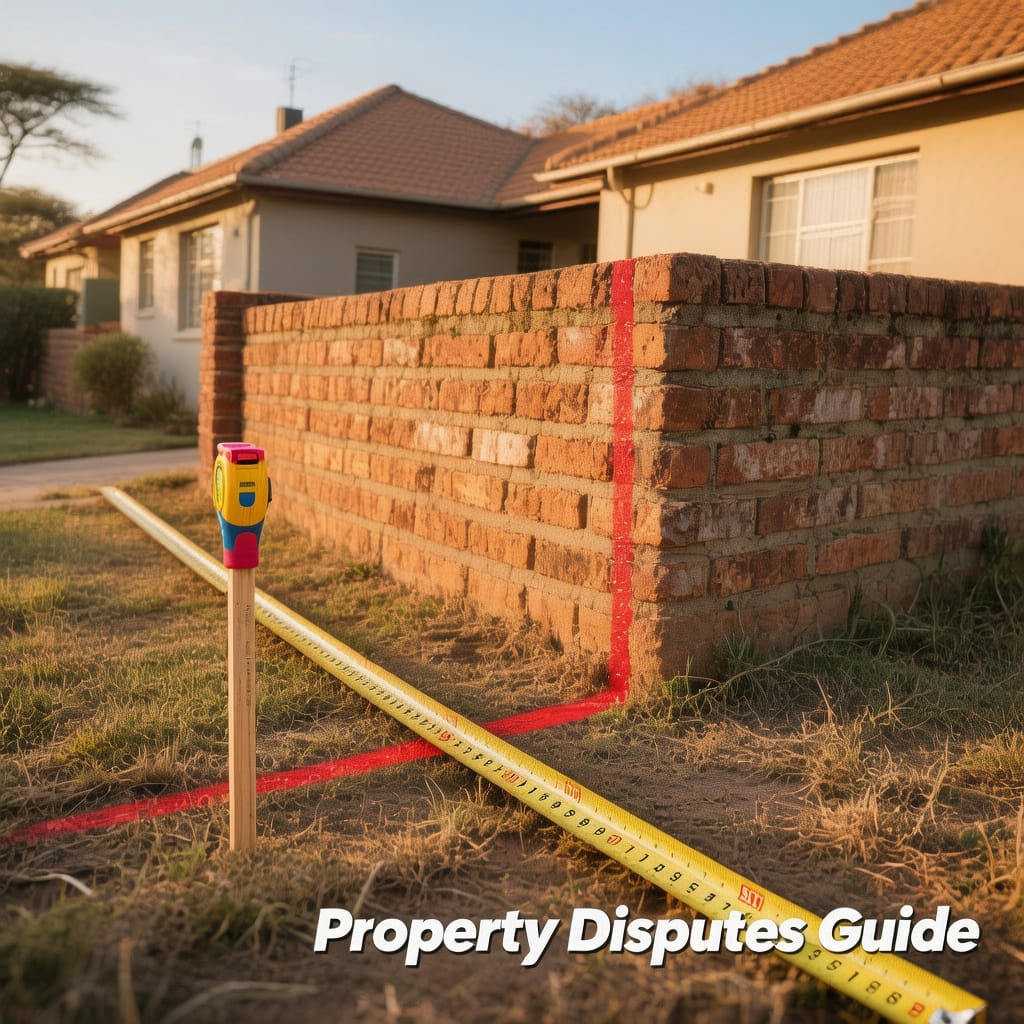
Property Disputes: 12 Proven Steps to Fix Boundary Issues
By Charles Reece • Published by Reece Law Inc.
Here is the honest truth. Property Disputes often start small and then snowball. A misplaced fence post, a new wall, or a driveway that creeps over the line can trigger months of tension and unexpected costs.
If you are facing Property Disputes or boundary issues in South Africa, you are not alone. With the right steps, you can protect your title, preserve neighbour relationships, and avoid unnecessary litigation.
This guide breaks down Property Disputes into practical actions you can take today. You will see how to read your deed, how surveys actually work, and how to choose the best remedy for your situation.
For page speed and a smooth read, all images are compressed and our caching-friendly layout keeps load times low on mobile and desktop.
What Are Property Disputes in South Africa?
At their core, Property Disputes are disagreements over rights to land and buildings. The most common flashpoint is the exact position of a boundary. Encroachment is the usual symptom, but the cause is often poor information or missing beacons.
Think fences, walls, garages, carports, decks, eaves, or even paving. In many Property Disputes, the structure crosses the cadastral line by a few centimetres. Other times, the discrepancy is a full metre or more, which raises the stakes.
Not all Property Disputes are about lines on the map. Neighbour law also covers nuisance, stormwater, trees, roots, retaining walls, and support of land. Title conditions, servitudes, and building lines bring municipal rules into play too.
In South Africa, your legal boundary is set by the Surveyor-General diagram and coordinates, not by where a fence happens to sit. That is why a professional survey is the backbone of most Property Disputes and why photographs alone are not enough.
Why boundaries go wrong in Property Disputes
- Faded or buried boundary beacons that were never re-established.
- Historic fences erected for convenience, not accuracy.
- Building plans approved on a sketch without a recent survey.
- Title deed errors or ambiguities that were never corrected.
- Assumptions during sale or transfer that later prove false.
Good news. Most Property Disputes can be resolved with a calm process. A solid survey, open dialogue, and early legal input usually prevent courtroom battles.
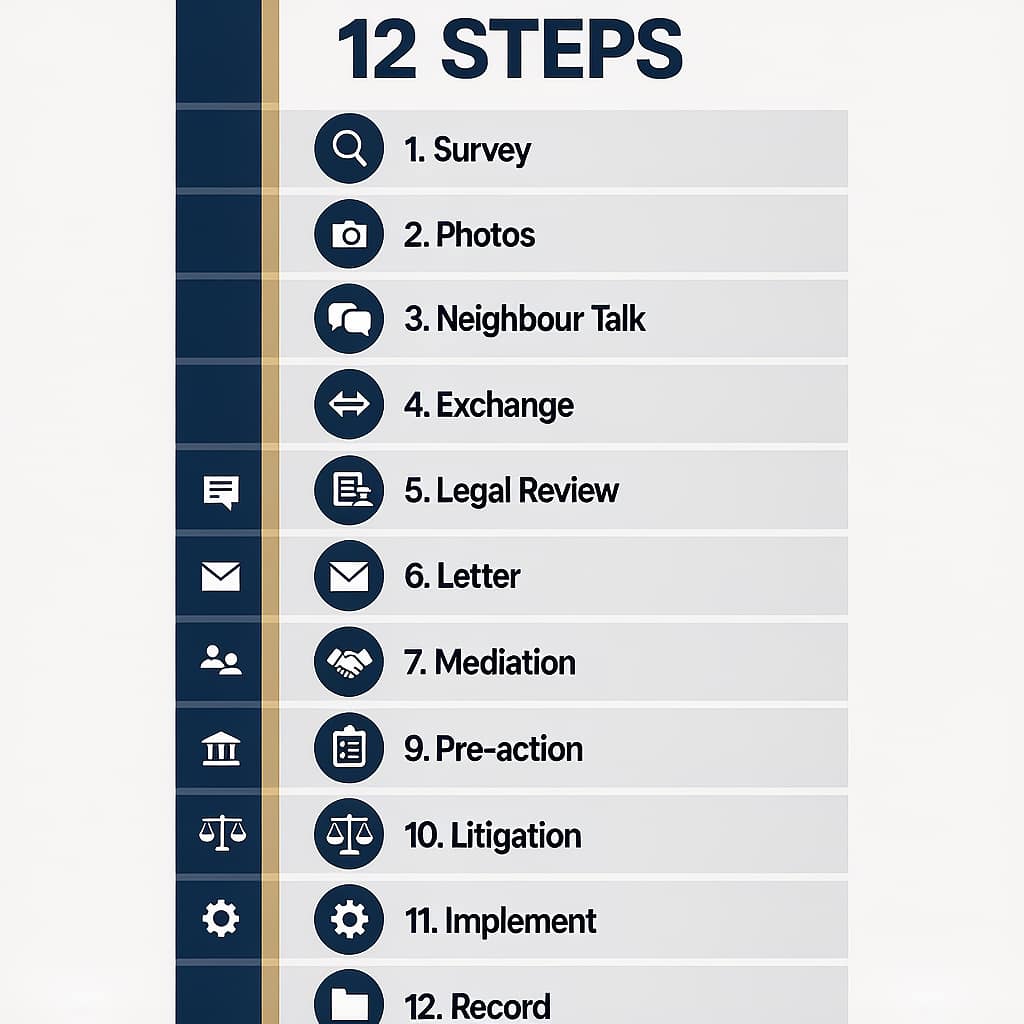
12 Proven Steps to Resolve Property Disputes and Boundary Issues
Use this roadmap to bring clarity, manage risk, and keep control of costs. These steps are designed for South African Property Disputes where boundaries or neighbour rights are in question.
1) Collect the core documents
Start with your title deed, Surveyor-General diagram, and any servitude endorsements. Property Disputes turn on these papers, so get certified copies from the Deeds Office if you do not have them.
Add your building plans, municipal zoning, and any approvals or wayleaves. When Property Disputes involve building lines, these records drive the outcome.
2) Confirm the actual boundary on the ground
Hire a registered land surveyor to locate or re-establish boundary beacons. Property Disputes often vanish once the beacons are found, measured, and marked with paint or pins.
Ask for a short report plus a plan overlaying the true line against current fences. In many Property Disputes, a clear plan is the difference between debate and agreement.
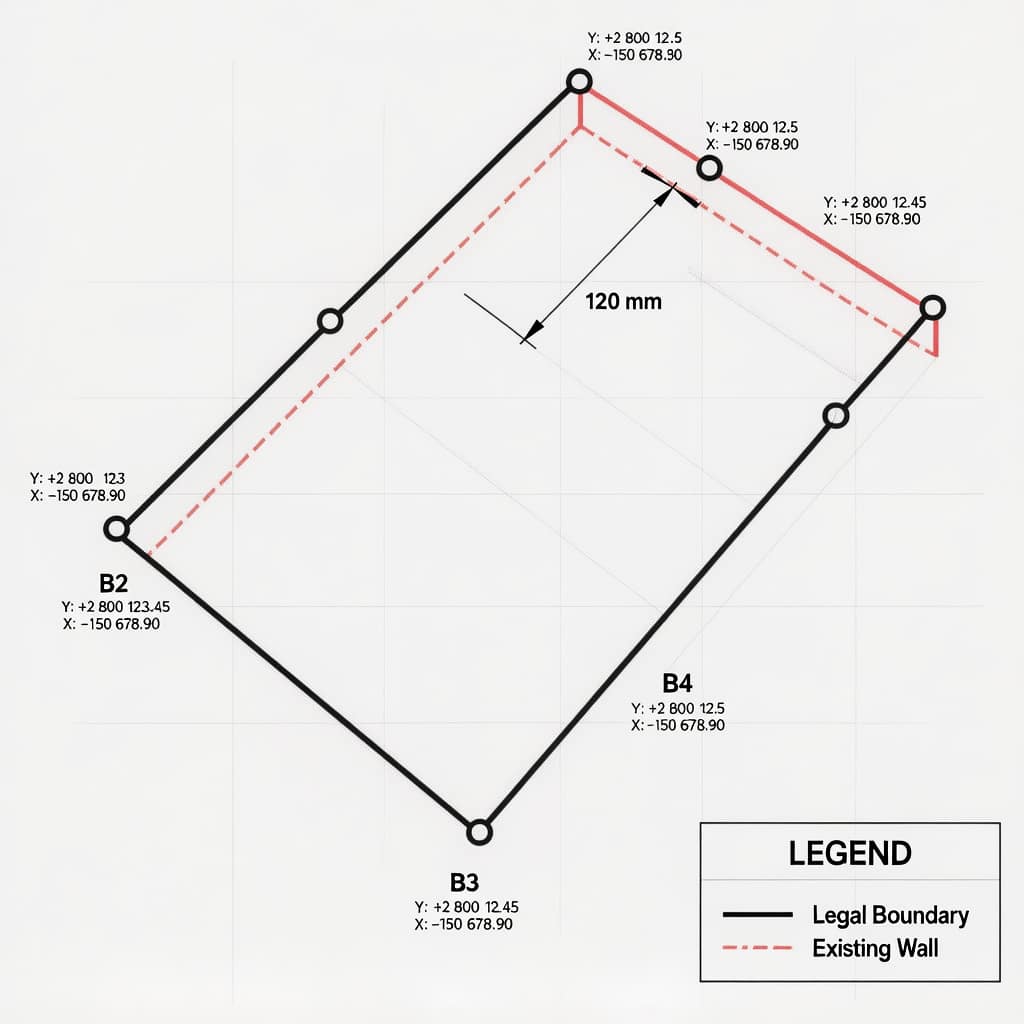
3) Document everything carefully
Create a dispute diary. Property Disputes benefit from dated photos, sketches, and measurements. Note conversations and keep copies of every email and letter.
Label photos with directions and distances. In many Property Disputes a single well-labeled photo can cut through confusion and speed up settlement.
4) Talk to your neighbour early
Invite a calm, fact-first chat. Property Disputes escalate when people feel ambushed, so share the surveyor’s findings and propose a site meeting.
Focus on options, not accusations. If the wall is a few centimetres over, many Property Disputes settle with a simple boundary acknowledgment or a small adjustment.

5) Exchange documents and identify gaps
Swap deeds, plans, and survey extracts. Property Disputes usually narrow once both sides see the same facts. Flag any differences between the municipal plan and the SG data.
If an encroachment is minor, consider a recorded acknowledgment. For larger overlaps, Property Disputes may need removal, compensation, or a servitude agreement.
6) Get a focused legal review
A short consult with a property attorney pays for itself. Property Disputes cut across title, planning, and neighbour law. You want a single, coherent strategy.
If you need structured guidance or representation, Reece Law Inc. can assess evidence, map the remedies, and steer communication so you do not concede rights by accident.
7) Send a without prejudice letter of demand
Set out the surveyor’s findings, attach the plan, and list solutions. Property Disputes move faster when your letter is clear on deadlines and outcomes.
Offer reasonable options. For example, remove the encroachment, agree a consent servitude with compensation, or relocate the fence. Keep tone professional and the window short.
8) Consider mediation to break deadlock
Mediators help neighbours move past emotion. Property Disputes that feel stuck often settle in a half-day session. You can include a cost-share clause to keep it fair.
Ask your mediator to record a binding settlement. In many Property Disputes, a consent order filed at court gives both sides certainty.
9) Engage the municipality when needed
Encroachments onto building lines or servitudes sometimes need municipal involvement. Property Disputes can end with a building line relaxation or a regularisation plan where appropriate.
Where health, safety, or public land is affected, enforcement is stricter. In serious Property Disputes the municipality may insist on removal of non-compliant work.
10) Use a pre-action protocol mindset
Exchange expert reports, pinpoint issues, and make reasoned offers. Property Disputes settle more often when both sides can see the risks and costs of trial.
Propose inspection of the site by both experts together. Joint minutes cut wasted time and are persuasive if the case proceeds.
11) Litigate if you must
Some Property Disputes need the authority of a court. For urgent harm or ongoing construction, seek an interdict. For final relief, sue for removal, damages, or a transfer of the sliver with compensation.
Structure your case around the survey, photos, and factual timeline. If litigation becomes necessary, Reece Law Inc. can manage the process and keep fees proportional to the value at stake.
12) Implement, record, and prevent repeats
After settlement or judgment, action the outcome quickly. Property Disputes stay closed when the line is marked, the fence is corrected, and the agreement is filed.
If boundaries or servitudes changed, lodge the right documents. In many Property Disputes, the last 10 percent of admin protects you from the next 90 percent of future hassle.
Key Laws and Bodies That Shape Property Disputes
Understanding the legal landscape helps you make better choices. Property Disputes in South Africa touch several statutes, agencies, and principles of neighbour law.
Survey and title framework
- Surveyor-General and the cadastre set the official boundary framework used in Property Disputes.
- Deeds Registries manage title, servitudes, and endorsements that often decide Property Disputes.
- Municipal planning schemes control building lines, coverage, and height that intersect with Property Disputes.
Neighbour law and encroachment
Courts balance strict ownership rights against fairness. In Property Disputes over encroachment, judges consider extent, good faith, prejudice, and whether removal would be wasteful.
Outcomes vary. You may get removal, damages, or transfer of a sliver. Property Disputes that involve bad faith usually attract stricter orders and costs.
Servitudes and title conditions
Stormwater, sewer, and access servitudes limit what you can build. Property Disputes often arise when improvements cut across these rights. Read your deed and the scheme rules carefully.
Prescription and long use
Acquisitive prescription is rare but real. Property Disputes sometimes involve a driveway or wall that has been in place for decades. If the use was open and as if by an owner for 30 years, rights may have shifted.
Evidence That Wins Property Disputes
Facts settle cases. Build a clean evidence file to control the narrative and costs. In most Property Disputes, the strongest items are independent and time stamped.
- Survey plan with coordinates, beacon status, and measured offsets.
- High resolution photos from multiple angles with dates.
- Approved building plans and any deviations or consent letters.
- Expert joint minute if both surveyors inspected together.
- Neighbour correspondence showing reasonable proposals and deadlines.
Keep originals and scan to PDF. Property Disputes get cheaper when everything is organised, shareable, and easy for a mediator or judge to follow.
About fences, walls, and hedges
Do not assume a fence equals a boundary. Property Disputes often trace back to a convenience fence that was never meant as the legal line. Ask your surveyor to flag the difference on the plan.
Digital housekeeping helps
Name files consistently. For example, 2025-02-04-survey-offsets.pdf and 2025-02-04-east-wall-encroachment-120mm.jpg. In long Property Disputes, good filenames save real money.
Costs, Timelines, and Strategy in Property Disputes
Plan for a range and control the process. Property Disputes can resolve in a few weeks if the facts are tight and the parties are pragmatic. Complex matters with large encroachments or title errors take longer.
Typical ranges
- Surveyor site work and report: R8,000 to R40,000 depending on complexity.
- Mediation session: R6,000 to R15,000 shared, plus venue or virtual costs.
- Attorney advice letter and negotiation: R6,000 to R25,000 depending on work required.
- Litigation for removal or compensation: R80,000 to R250,000 or more based on evidence and court time.
Time can be the real cost. Property Disputes drag when parties avoid decisions. Use short deadlines, clear offers, and a readiness to escalate if needed.
Risk reduction tips
- Get a survey early so you argue about solutions, not facts.
- Make settlement offers that factor in legal fees and disruption.
- Use a without prejudice channel to test ideas without prejudice to rights.
- Record agreements in writing with diagrams attached.
If you need measured, court ready strategy, Reece Law Inc. can align your survey evidence with the right remedy and keep pressure on sensible settlement.
HOAs, Sectional Title, and CSOS in Property Disputes
Community schemes come with extra rules. Property Disputes in estates and sectional title schemes often involve exclusive use areas, parking bays, garden walls, or architectural controls.
When by-laws and scheme rules collide, check each layer. Property Disputes may be resolved by a CSOS adjudicator at lower cost than court, especially for rule enforcement and boundary disagreements in common property.
Keep your tone professional and your paperwork precise. In community settings, Property Disputes are as much about process and fairness as they are about centimetres on a plan.
Preventing Future Property Disputes
Prevention is cheaper than any remedy. A little diligence before you buy or build avoids most Property Disputes.
Before you buy
- Order the deed and SG diagram and check title conditions.
- Walk the boundary, find beacons, and look for signs of encroachment.
- Compare the agent’s site plan to the SG diagram for alignment.
Before you build
- Commission a boundary confirmation survey if beacons are uncertain.
- Confirm building lines and height limits on the municipal scheme.
- Speak to your neighbour about construction timing and access.
When you settle a dispute
- Record the line with pegs or plates on both ends of the affected boundary.
- Attach the agreed plan to any settlement or consent order.
- Store the final documents with your deed for quick access later.
Finally, keep your project file digital and small. Compress images and use caching on shared folders. Clarity and speed help everyone, and future Property Disputes are less likely when the paper trail is bulletproof.
FAQs on Property Disputes and Boundary Issues
These answers tackle the questions homeowners ask most during Property Disputes. Use them as a starting point and get tailored advice for your facts.
How accurate is a survey in Property Disputes?
Very accurate when done by a registered professional. Property Disputes revolve around the surveyor’s ability to tie the site to cadastre coordinates and monuments.
What if both fences are wrong in Property Disputes?
It happens. A plan that shows the true line relative to both fences helps you agree on a correction. Property Disputes like these usually settle without court once the map is clear.
Do I need court for every encroachment?
No. Many Property Disputes end with a short agreement. Use removal, a servitude, or compensation if practical. Keep the settlement diagram attached to the contract.
Can goodwill hurt my rights in Property Disputes?
If you allow an encroachment without terms, it can. Always record temporary permissions and expiry dates. Property Disputes shrink when expectations are written down.
What does a fair offer look like?
Offer choices. Remove by a date, pay damages in lieu, or buy the sliver and cover costs. Property Disputes close when both sides can accept a rational middle ground.
When should I stop talking and act?
Stop negotiating when deadlines expire without progress or when construction continues across the line. Property Disputes sometimes need an urgent interdict to hold the status quo.


Post Comment