Property transfer process South Africa: 9 Stress Free Steps
Property transfer process South Africa: 9 Stress Free Steps
By Charles Reece. Published by Reece Law Inc.
Buying or selling a home should feel exciting, not overwhelming. This guide walks you through the property transfer process South Africa with plain language, practical checklists, and timing tips so you can move from offer to keys without chaos.
Here is the headline promise. Follow these steps, avoid the common pitfalls, and lean on a capable conveyancer when needed, and the property transfer process South Africa becomes predictable, transparent, and much less stressful.
Quick note for readers on the go. Images in this article are compressed and our server uses caching for faster page loads, so you can scan every step on your phone without lag.
What is the property transfer process South Africa
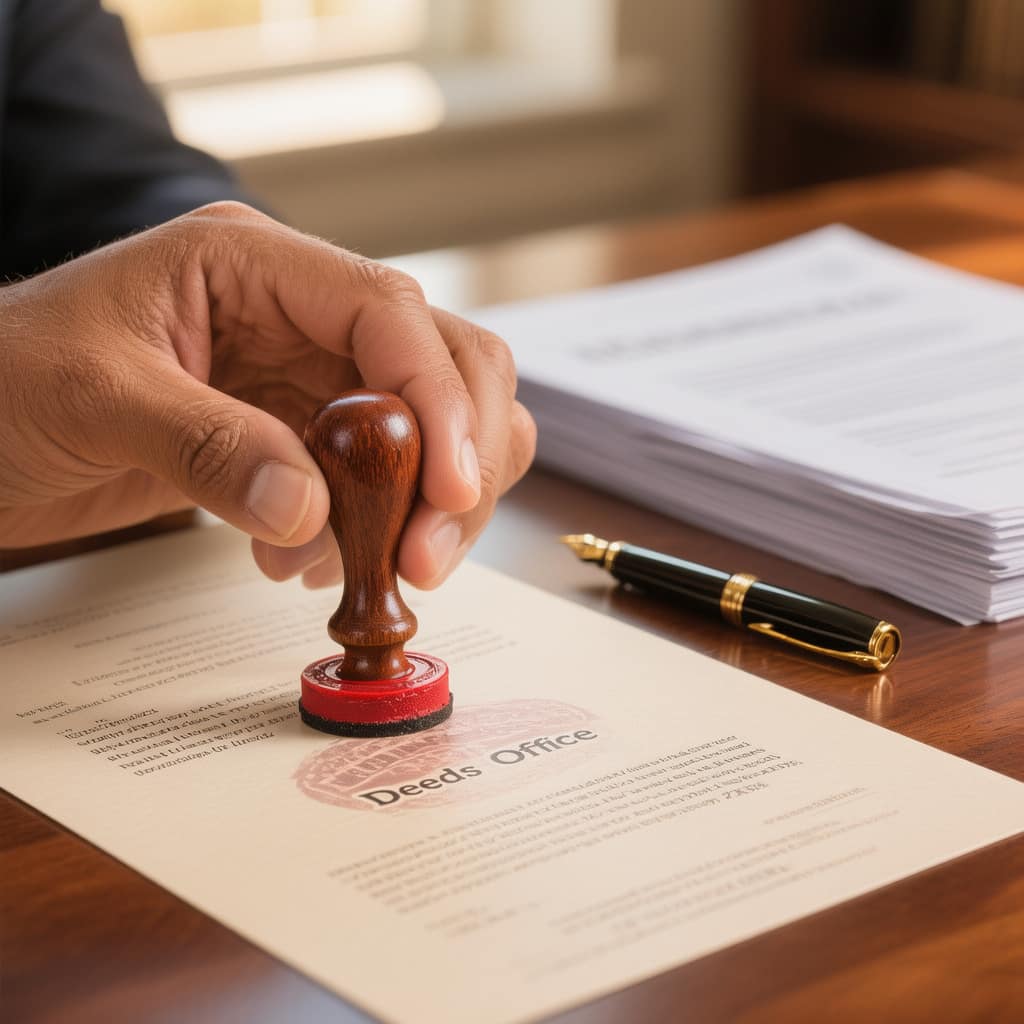
At its core, the property transfer process South Africa is the legal pathway that moves ownership from seller to buyer in the Deeds Office. It is managed by a specialist attorney called a conveyancer, who ensures all documents, taxes, and bank guarantees are in place.
The property transfer process South Africa is not a single event. It is a coordinated series of milestones that happen in parallel. Your offer to purchase frames the deal, compliance checks unlock the documentation stage, and then lodgement and registration at the Deeds Office complete ownership change.
Because banks, SARS, municipalities, and bodies corporate all play roles, the property transfer process South Africa succeeds when information is correct, money is secure in trust, and everyone responds quickly to requests. A well led file prevents surprises.
Who does what in the transfer
Conveyancer and their team
Your conveyancer is the project manager of the property transfer process South Africa. They draft and check documents, collect transfer duty receipts, secure clearances, and lodge deeds. They also protect buyer and seller funds in an audited trust account and disburse on registration.
Buyer and seller
The parties supply FICA documents, sign transfer papers, and meet financial obligations. In the property transfer process South Africa the buyer usually pays transfer duty and bond fees, while the seller pays the conveyancing transfer fee and bond cancellation fee from the proceeds.
Estate agent
The agent introduces the parties, helps negotiate the offer, and monitors progress. They often nudge everyone to keep the property transfer process South Africa moving and arrange key handover once registration is confirmed.
Bond and cancellation attorneys
The buyer’s bank appoints a bond attorney to register the mortgage. The seller’s bank appoints a cancellation attorney to cancel the old bond. These matters are interdependent with the property transfer process South Africa and all deeds lodge together for simultaneous registration.
Deeds Office
The Deeds Office examines and registers title deeds. In the property transfer process South Africa, examiners check compliance with the Deeds Registries Act, sectional schemes, and existing conditions. Registration changes legal ownership and is the final word.
Municipality and body corporate
Rates clearance and levy clearance are mandatory. No clearances, no lodgement. Many delays in the property transfer process South Africa come from outstanding municipal accounts or body corporate arrears, so settle these early.
Looking for experienced guidance. Reece Law Inc. regularly handles complex transfers and can coordinate your file from day one without fuss.
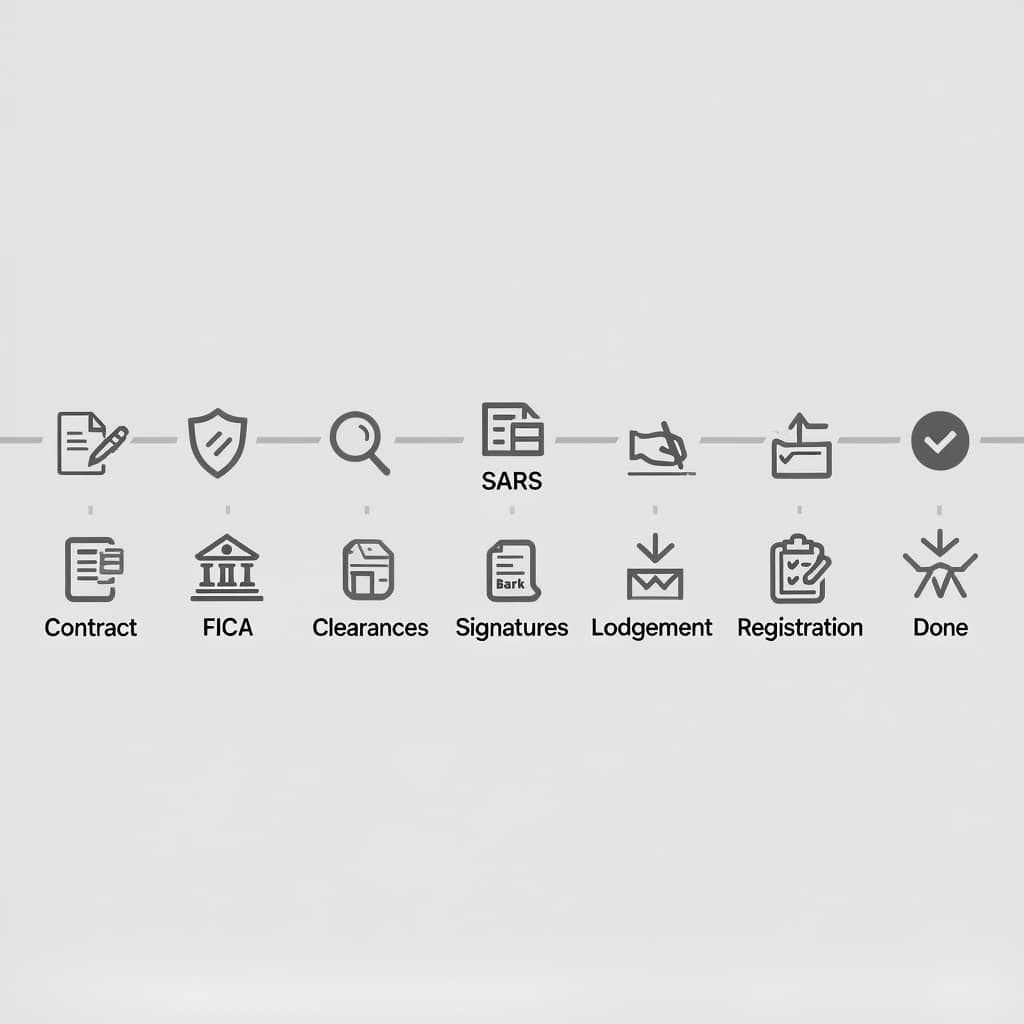
Step by step timeline for the property transfer process South Africa
Step 1: Offer to purchase accepted
This is the spark. The sale agreement sets the price, deposit, inclusions, and suspensive conditions like bond approval. A clean contract makes the property transfer process South Africa smoother because everyone knows the rules upfront.
Include deadlines you can meet. If the contract is vague, it invites disputes that slow the property transfer process South Africa and can even cause cancellation. Keep it clear and signed by all parties with initials on every page.
Step 2: Appoint the conveyancer
The seller typically nominates the conveyancer. Choose a firm that treats timelines seriously and communicates. A capable team turns the property transfer process South Africa into a predictable set of updates rather than a black box.
If you prefer a specific attorney, negotiate this in the offer. A good fit matters because the conveyancer runs every moving part of the property transfer process South Africa and safeguards the money.
Step 3: FICA and compliance checks
Before funds are accepted, the conveyancer must complete FICA checks. Send certified IDs, proof of address, marriage or ANC contracts, and where relevant company or trust documents. Fast FICA keeps the property transfer process South Africa on schedule.
If a party is overseas, plan for notarised or apostilled documents. Getting this right early avoids weeks of delay in the property transfer process South Africa during lodgement prep.
Step 4: Bond approval or guarantees
If the buyer needs finance, the bank will issue a bond grant subject to conditions. The bank then appoints a bond attorney to prepare bond documents. Without timely bond progress, the property transfer process South Africa stalls, so respond to every bank request quickly.
Cash buyers must provide guarantees or pay the purchase price into the conveyancer trust closer to lodgement. Real guarantees that match the deal terms help the property transfer process South Africa move forward with confidence.
Step 5: Rates and levy clearances
The conveyancer requests municipal rates clearance figures and body corporate levy figures. Until these are issued and paid, the property transfer process South Africa cannot proceed to lodgement. Sellers should keep accounts current to avoid surprise arrears.
Clearances often cover a future period. Budget for these upfront to avoid last minute scrambling that holds up the property transfer process South Africa.
Step 6: Transfer duty or VAT paid
Most residential transfers attract transfer duty. The buyer pays the duty and the conveyancer obtains a SARS receipt. No receipt, no lodgement. Paying early keeps the property transfer process South Africa moving toward the Deeds Office queue.
If the seller is VAT registered and the sale is a VAT supply, VAT replaces duty. Clarify this in the contract to prevent double charging that would derail the property transfer process South Africa.
Step 7: Sign transfer and bond documents
Both parties sign. The seller signs power of attorney to transfer, affidavits, and declarations. The buyer signs transfer declarations and any bond documents. Accurate signatures keep the property transfer process South Africa on track for examination.
Signing can be done at the conveyancer or by arrangement elsewhere. If you sign outside South Africa, follow authentication rules so the property transfer process South Africa does not hit a technical snag.
Step 8: Lodgement at the Deeds Office
When documents, guarantees, and clearances are ready, the conveyancer lodges the transfer, bond, and cancellation. The Deeds Office examines the file in stages. This is the quiet part of the property transfer process South Africa where patience matters.
Examiners may raise notes that require corrections. Skilled drafting helps avoid notes, speeding the property transfer process South Africa to registration day.
Step 9: Registration and payout
On registration, ownership changes legally and irrevocably. The conveyancer then pays the seller, agents, and any third parties from trust. This is the finish line of the property transfer process South Africa and when keys are usually handed over.
Expect a final statement showing the flow of funds. Good bookkeeping makes the last step of the property transfer process South Africa transparent and easy to audit.
Costs in the property transfer process South Africa
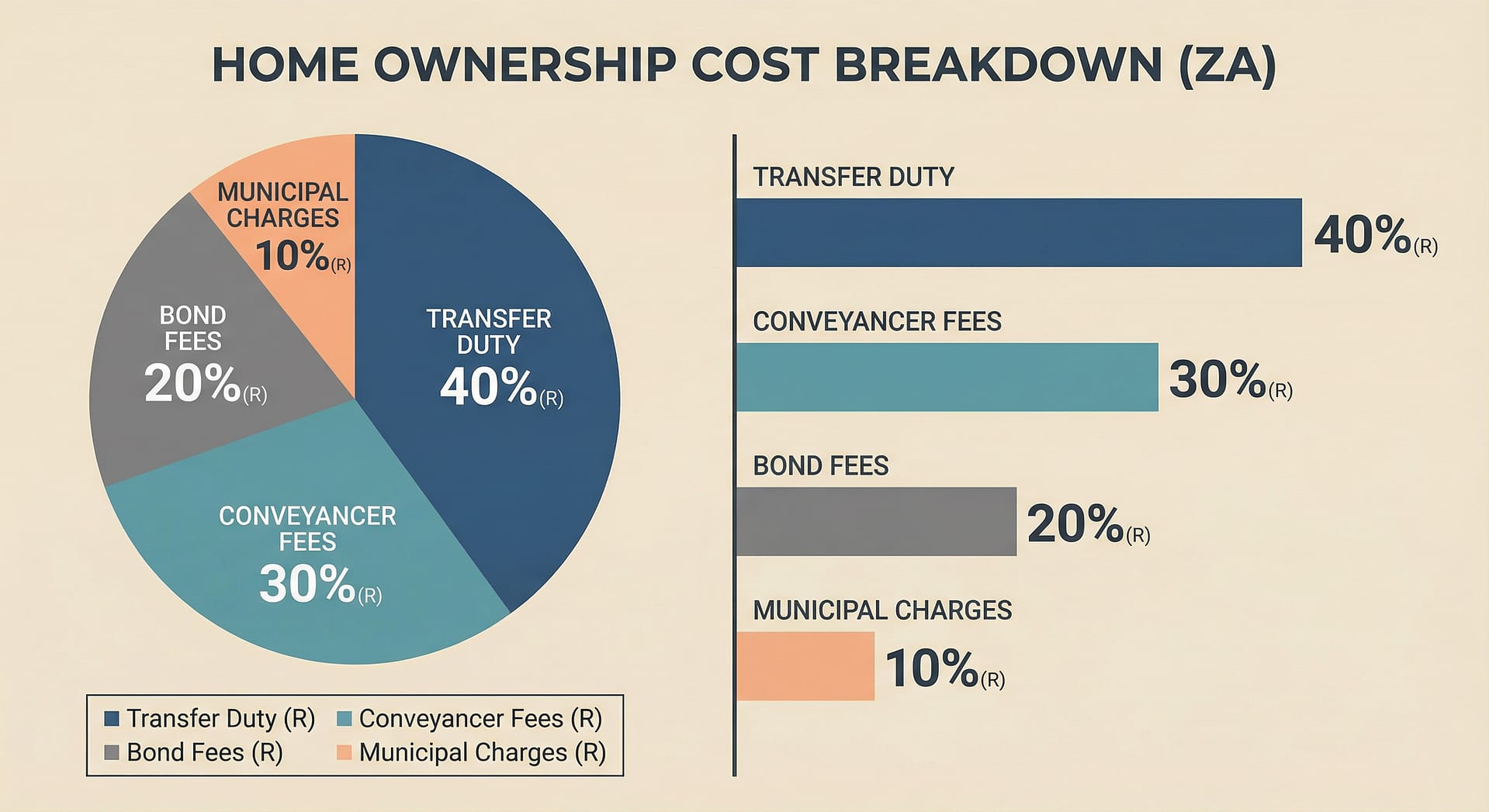
Budget beats surprise. Here are the typical items you will see in the property transfer process South Africa, noting that tariffs, municipal fees, and bank charges change over time.
- Transfer duty or VAT depending on the deal
- Conveyancer transfer fee with disbursements and postages
- Bond registration attorney fee and bank initiation fee
- Rates and levy clearances, compliance certificates, and deeds office fees
- Bond cancellation fee for the seller if there is an existing mortgage
Ask for itemised pro forma invoices early. Clear estimates keep the property transfer process South Africa financially predictable and help both parties plan cash flow.
Common pitfalls that slow the process
Most delays in the property transfer process South Africa are avoidable. Here is how to sidestep the usual suspects.
- Vague suspensive conditions that create disputes about deadlines
- Late FICA documents from buyers or sellers
- Arrears on municipal accounts or levies
- Slow bank turnaround or missing guarantees
- Errors in names, ID numbers, or marital status on documents
Simple fix. Keep a single email thread and answer requests within one business day. That habit alone can cut weeks off the property transfer process South Africa.
Special scenarios in the property transfer process South Africa
Sectional title apartments
For sectional schemes, levy clearance and trustees consents are mandatory. Rules about exclusive use areas and parking bays can complicate the property transfer process South Africa if not captured correctly in the offer and the deed.
Freehold homes
Freehold sales often move faster but still depend on clean rates accounts and correct erf details. Correct diagrams prevent survey related delays in the property transfer process South Africa.
Deceased estates and trusts
Executor authority or trustee resolutions must be in place. Missing authority is a common reason the property transfer process South Africa pauses at the verification stage.
Foreign buyers
Foreign purchasers are welcome, but FICA and exchange control rules apply. Plan for apostilles, bank requirements, and potential tax clearance to keep the property transfer process South Africa running without international hiccups.
Cash sales vs bonded sales
Cash can be quicker, but guarantees must still be issued and clearances obtained. Bonded deals take longer because bank attorneys must synchronise their work with the property transfer process South Africa.
Documents checklist to keep nearby
- Certified IDs and proof of address for all parties
- Marriage certificate and ANC, or divorce order if applicable
- Company or trust documents and resolutions if applicable
- Signed sale agreement and addendums
- Proof of deposit and SARS transfer duty receipt
- Existing title deed if the seller has it on hand
Having these ready makes the property transfer process South Africa efficient from day one.
How to choose the right conveyancer
Experience, responsiveness, and clear fee transparency win every time. Interview the firm that will handle your file. Ask how they communicate and how they keep the property transfer process South Africa on schedule when third parties drag their feet.
If you want a calm, results driven team, consider Reece Law Inc. for proactive timelines, diligent drafting, and clear updates at every step of the property transfer process South Africa.
Digital convenience and speed boosters
E signatures for non deed documents, secure portals for uploads, and early SARS submissions shave days off the property transfer process South Africa. Ask for digital options where legally acceptable.
On the tech side, we optimise images and use caching so this guide loads fast on mobile. The same performance mindset applied to your paperwork keeps the property transfer process South Africa moving with minimal friction.
Realistic timeline expectations
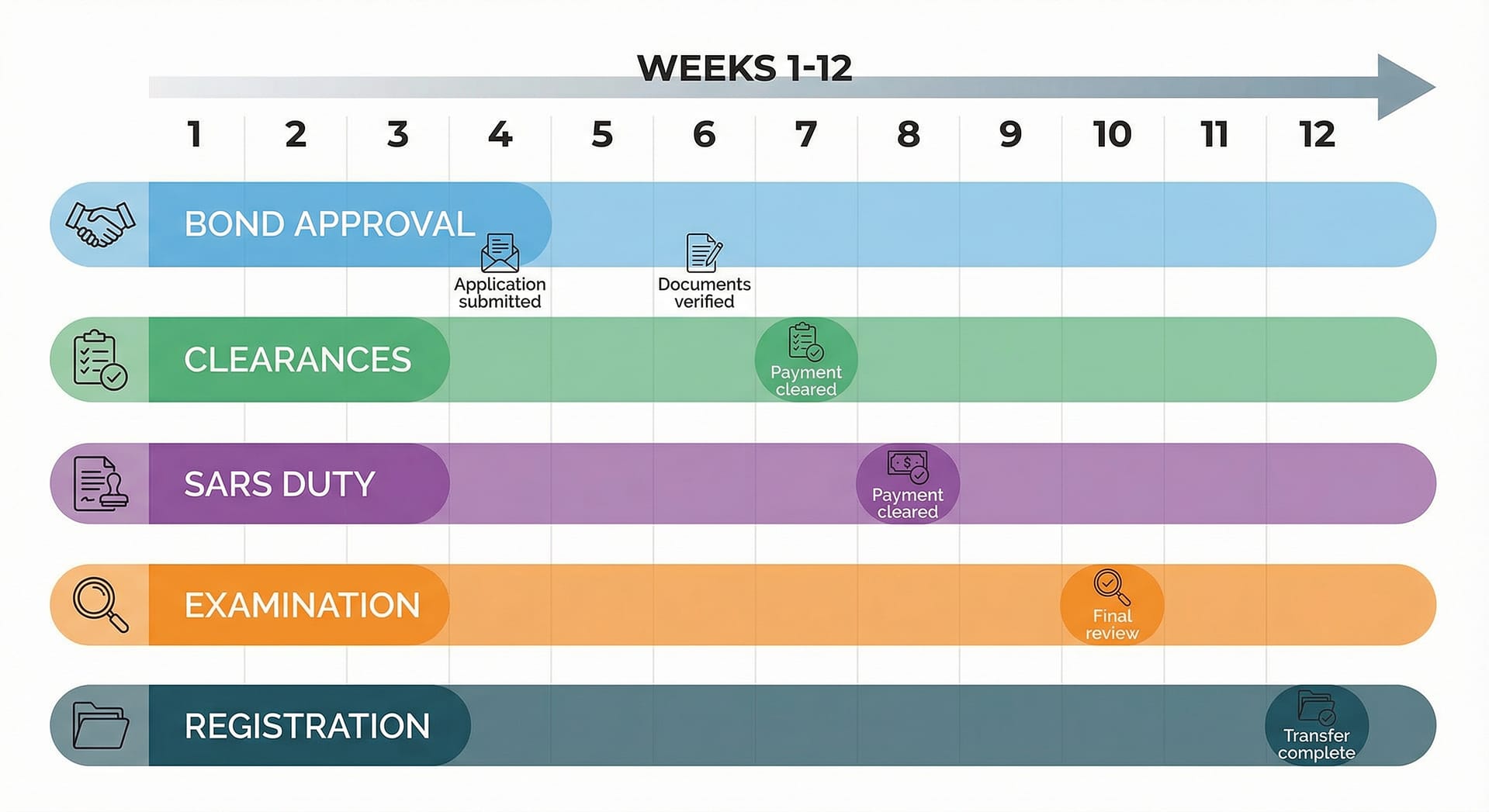
Many transfers register in 6 to 8 weeks. Some take 10 to 12. Plan for contingencies. If one path is blocked, your conveyancer should propose alternatives that keep the property transfer process South Africa advancing toward lodgement.
Weekend planning helps. If signing happens early in the week and duty is paid immediately, the property transfer process South Africa avoids long idle stretches while offices catch up.
FAQs
How long does the property transfer process South Africa usually take
Expect 6 to 12 weeks on average. Bond approval, municipal clearances, SARS duty receipts, and Deeds Office capacity are the big levers in the property transfer process South Africa timeline.
Who chooses the conveyancer
The seller usually nominates the conveyancer in the property transfer process South Africa, but you can agree otherwise in your sale agreement.
When are keys handed over
Usually on registration day unless occupational rent has been agreed. The golden rule in the property transfer process South Africa is keys on registration.
What are the biggest costs
Transfer duty or VAT, conveyancing transfer fee, bond registration fee, and clearances. Ask for a pro forma early to map the property transfer process South Africa costs line by line.
How can I avoid delays
Send FICA documents within 24 hours, settle arrears, pay transfer duty promptly, and sign documents as soon as they are ready. These habits speed the property transfer process South Africa more than anything else.
Can a foreign buyer purchase freely
Yes. The property transfer process South Africa welcomes foreign buyers who comply with FICA and exchange control rules. Bank guarantees may be required.
Do I need to attend the Deeds Office
No. Your conveyancer handles lodgement and attendance. You support the property transfer process South Africa by responding quickly to any queries.
Final word and next steps

With the right roadmap, the property transfer process South Africa is achievable and calm. Use this guide, keep your documents handy, and insist on proactive updates from your conveyancer.
If you want practical, results focused help, Reece Law Inc. is ready to lead your matter from offer to registration with clear communication and firm timelines.
Have questions or want us to review your sale agreement before you sign. Email info@reece-law.co.za or call 073 621 0822 or 031 945 9505. You can also contact our conveyancing team or explore our property law services before you commit. We would love to help you navigate the property transfer process South Africa with confidence.






Post Comment